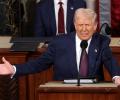
Experts suggest that a significant setback for US President Donald Trump in the midterm elections could compel him to pursue a swift trade agreement with India, as he seeks a quick foreign policy win amidst challenges with Russia, China, and Iran.

'There is a lot of euphoria in the country after a trade agreement is signed. But it is an illusion for us. What is more important is making it real.'

The US is planning to increase tariffs on China, India, and several other countries as early as this week, citing concerns over excess industrial production that harms American companies. This move follows a US Trade Representative (USTR) investigation under Section 301 into 16 economies for alleged unfair trade practices and subsidies. India and the US are currently negotiating a bilateral trade agreement, with India seeking lower tariffs for its goods.

Prime Minister Narendra Modi has challenged Indian industry leaders to increase job creation and employee salaries, arguing that government tax concessions and income tax relief should translate into greater employment and economic activity. He also urged businesses to improve product quality for the domestic market and leverage new trade agreements for global competitiveness.

Bentley Motors expects India to become one of its 10 largest markets globally within the next five years, driven by lower import duties under the India-UK free trade agreement (FTA) and a growing base of wealthy consumers, according to CEO Frank-Steffen Walliser.
India is waiting for assurance from the US on comparative advantage over other economies under the deal.

A strike by Dakshin Haryana Bijli Vitran Nigam (DHBVN) workers has caused widespread power outages across Gurugram, Faridabad, and Nuh districts since Wednesday night. Thousands of residents and industrial units are affected, leading to significant economic losses and disruption of essential services like water supply. Talks between authorities and striking employees have so far been inconclusive.

Prime Minister Narendra Modi has announced a significant 24,000 crore Nepalese rupees development package for Nepal, further solidifying bilateral ties and launching key India-assisted projects, including a new cross-border passenger rail link between Ayodhya and Janakpur Dham. This move signals a major reset in relations after a period of strain over border disputes, with both leaders emphasising deep kinship and mutual support.

Trump seems to have made up his mind that a pliant Pakistan will be more useful than India. We cannot expect a change in Trump's policy towards India in his post midterm poll tenure as America's president, observes Ambassador T N Sreenivasan.

BRICS members have expressed 'serious concerns' over the unilateral imposition of trade and finance-related measures, including higher tariffs and non-tariff barriers, stating these actions distort trade and are inconsistent with WTO rules. The grouping also highlighted elevated risks to the global economic outlook due to geopolitical tensions, trade fragmentation, and protectionism.

A US trade representative described India as a 'tough nut to crack' during trade agreement negotiations in Washington, highlighting India's protection of its agricultural markets and the ongoing discussions on specific commodities.

'The political leadership is very clear that we have to move towards the integration of the three services into theatre commands.'
India's power sector is undergoing a significant transformation, driven by a planned shift towards renewable energy and ambitious capacity expansion targets, with major players like NTPC, JSW Energy, Adani, and Tata Power prioritising predictable returns. However, execution challenges and valuation concerns remain critical factors for sustained growth.

The Union Culture Ministry is developing an AI-powered "visual library of stolen antiquities" to scientifically compare suspected illegally exported objects with original images. This initiative aims to provide timely evidence for intervention, halt auctions, and facilitate the repatriation of India's cultural heritage. The ministry also launched an AI-powered semantic search engine for Indian culture.

China announced a "ground-breaking" trilateral meeting between the presidents of China, the US, and Russia, scheduled for November 19 in Shenzhen during the APEC summit. This first-ever face-to-face meeting aims to discuss safeguarding world peace, strategic stability, and global challenges like nuclear arms reduction and artificial intelligence. Beijing has shown reluctance on trilateral nuclear arms control due to its smaller arsenal, while the war in Ukraine will not be a discussion point. The APEC summit will also see Japanese Prime Minister Sanae Takaichi's participation, drawing attention due to recent Sino-Japanese tensions over Taiwan.

Indian automakers like Tata Motors Passenger Vehicles and Mahindra & Mahindra are experiencing increased semiconductor procurement costs due to surging demand from AI data centres. This global shift is tightening chip supplies for conventional automotive applications, forcing manufacturers to pay premiums and build inventories to maintain production, with concerns about prolonged supply constraints and rising prices for memory chips.

Xi brought in asymmetrical power play by stating that India should have 'strategic cognition' and 'strategic judgement made on the basis of the stage of development the two countries are at'. This is a very nuanced way of asserting China's coercive diplomatic posture and reflects Beijing's penchant to unleash border instability at will, restrict rare earth metal exports, exert pressure on India at global and regional orders, asserts China expert Srikanth Kondapalli.
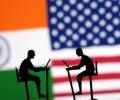
India and the US have reported positive progress in recent trade talks in Washington, agreeing to maintain engagement to finalise a bilateral trade agreement, which now requires recalibration following new US tariffs.

Former US Secretary of State Antony Blinken stated that the US must respect India's right to self-defence and maintain a zero-tolerance policy towards terrorism, highlighting the "fundamentally different" nature of Washington's relationships with New Delhi and Islamabad. He described US-India ties as global and strategic, while US-Pakistan relations are regional. Blinken also touched upon cooperation in emerging technologies, India's ties with Russia, rapid global changes, US domestic politics, and the West Asia conflict, advocating for a two-state solution.

Piyush Goyal on Friday rejected reports suggesting that India is planning to hold off trade deal with the United States for several months.

'It is a blunt and dangerous attempt to pressure India to sign BTA on one-sided terms.'
India and the US have decided to reschedule their meeting to finalize the interim trade pact due to recent developments and implications, including changes in US tariffs.

Commerce Minister Piyush Goyal announced that the legal scrubbing of the India-EU Free Trade Agreement (FTA) text is expected to be completed within 10-12 days, with the final deal anticipated to be signed by December 31.
Chief negotiators from India and the US are set to begin three-day talks in Washington to recalibrate the bilateral trade agreement (BTA) framework, following significant changes in the US tariff landscape, including a new 10 per cent tariff imposed on all countries.

The subtext here is that nobody else really matters to America today; only China, because nobody else can truly hurt them, points out Mihir S Sharma.
India and the United States are committed to finalising an interim trade agreement, despite recent challenges including the US imposing a blanket 10 per cent surcharge and India's decision to wait for a new global tariff architecture. The US Trade Representative's annual report highlights India's maintained high import tariffs and various non-tariff barriers across several sectors.

'Based on the joint statement, a formal agreement will be drafted, which may take a month or month-and-a-half to finalise. We aim to sign the formal agreement by mid-March.'

Navigating this geopolitical minefield requires a cold-blooded blend of immediate tactical pleading, structural domestic diversification, and aggressive collective resistance, suggests Ambassador Rajasekhar.
AM Green Ammonia has won the Asian lot in H2Global's auction, securing a 10-year agreement to supply renewable ammonia to Germany, valued at over 585 million euros. This deal positions India as a significant exporter of green molecules, with production slated for AM Green's Kakinada project, utilising renewable power and aiming for 2029 deliveries.

'The contours of the trade deal need to be reworked now.'

Beijing published the world's first global framework for vocational standards. If India does not act swiftly, it will be compelled to certify its workers by someone else's rulebook, cautions Abhay Jere, ex-Vice Chairman, AICTE.

The Chintan Shivir is expected to discuss the progress of government schemes, policy implementation, time management, inter-ministerial coordination, and public service delivery, among others.

Chinese President Xi Jinping began his second state visit to the US, meeting President Donald Trump at the White House. Both leaders expressed a desire for a better future for their nations, with Xi emphasising cooperation over confrontation and the avoidance of the "Thucydides Trap." Discussions also touched upon artificial intelligence governance and the extension of a trade truce. The visit was notably marked by a media boycott of White House coverage due to a dispute over press access.

India is strategically positioned to develop a robust domestic semiconductor ecosystem, driven by increasing electronics consumption, strong government support through incentives, and a global shift in supply chains. Boston Consulting Group Managing Director Ankush Wadhera highlights India's potential as a safe haven for investments, with the AI boom further fuelling demand for advanced chips. The nation aims to expand its capabilities across the entire semiconductor value chain, attracting significant global and domestic investments.

The United States has implemented a 10 per cent tariff on goods imported from India and 16 other countries, citing efforts to combat forced labour in production.

'It's very important for India to retain its sovereignty. India should not sign any agreement which compromises its sovereignty.'

US President Donald Trump is expected to sign the Lindsey O. Graham Sanctioning Russia and Iran Act of 2026 later on Friday (local time). A White House official confirmed the development to ANI without revealing further details.

'Tariff action relating to the excess-capacity investigation will be even more susceptible to judicial overturn.'

Responding to a question on the trade deal being negotiated between the two countries, Trump said India had taken advantage of US policies for years and charged tremendous tariffs.

India-US ties may be strained, but abandoning the relationship is not the answer; India must deal with Washington firmly without becoming either servile or hostile, asserts Ambassador T P Sreenivasan.
